
A Dive into PEARL: Making and Production
If you’ve only seen PEARL from the outside (which can be tricky, as we’re nestled inside London East Business Park), it can be hard to imagine what’s inside. This custom-built hangar — developed with support from the UK Government and University College London — is designed to create a wide range of immersive spaces. It enables scientists, academics, and public-sector partners to recreate scenarios as realistically as possible, so we can better understand how humans respond to different stimuli.
From a Making & Production point of view, the simplest description is this: PEARL is a flexible, reconfigurable “black-box” environment where we can build, rig, light, power, and control experiments safely — and then reconfigure everything again to create an entirely new environment.
That might mean building a street with busy traffic, a supermarket, London Underground platforms and train carriages, or recreating the disorientating sensations experienced by people living with dementia through projection, lighting, sound, and even smell.
At the heart of the space is an ambitious vision: to be able to “recreate anything within the known universe in one space.” PEARL supports multi-sensory installations, where we can combine light with sound, atmosphere, and environmental effects (think haze, airflow, and other controlled variables) to create believable conditions — without losing the precision required for research.
Our overhead rigging and support structure is central to making this possible. It’s where we hang lighting, audio, sensors, scenic elements, and test apparatus exactly where we need them. That means we can build with repeatability in mind: the same setup, the same positions, the same cues. This consistency supports robust analysis and helps generate valuable data that can be compared across participants and over time.
Beyond the hangar, the team also heads into the field to capture real-world reference material. We collect live 3D audio soundscapes using specially designed Ambisonic microphones, take light meter readings, and feed that data back into our systems — alongside set-building and material choices — as part of our “Touch Real” approach.
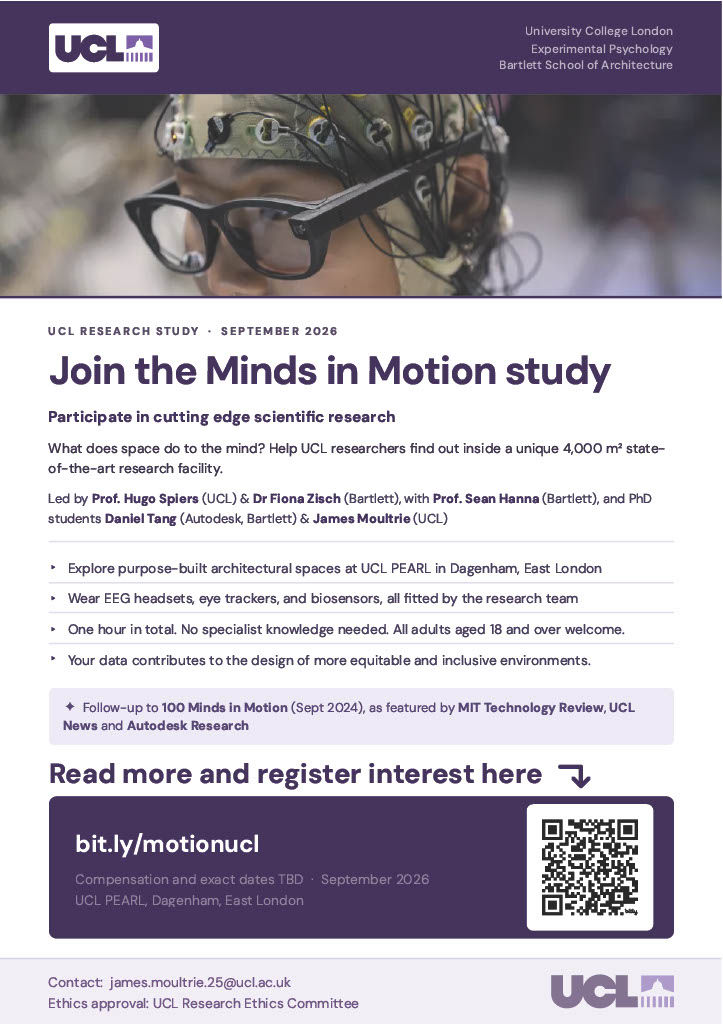
Control is handled through standard live-event show-control systems, so we can run timed cues, adjust levels and colours, and log what’s happening to participants. Depending on the study, that might include camera feeds, motion-tracking pucks, heart-rate monitors, eye-tracking equipment, or Shimmer: sensors that can measure physiological signals such as skin conductance from the fingertips.
Taken together, PEARL’s Making & Production capability lets us move from an idea to a testable, measurable environment quickly, while keeping safety, documentation, and repeatability front and centre. It’s a workshop mindset applied to full-scale human perception research — supporting public-sector partners and local, national, and international governments as they work to better understand and serve their communities.


Comments