
An Evolutionary Story: PAMELA to PEARL
Updated: Jun 2
There is a melody to be found in evolution, a symphony of growth, if you will, and in this regard, PEARL traces its DNA to Upper Holloway, for before there was a PEARL, there was a PAMELA. The Pedestrian Accessibility and Movement Environment Laboratory (PAMELA) was designed to study human interactions in controlled conditions by replicating real-world environments such as urban streets and public parks, its experiments intended to create safer streets and more user-friendly public spaces.
But where did PAMELA come from?
Well, we worked with the Department of the Environment Transport and the Regions, London Transport, and the London Borough of Newham in a project called EXCALIBUR, where we investigated how to design a bus stop so that buses could come close enough so that people in wheelchairs could board the bus without the need for any other assistance (such as a ramp). This meant building three full-size bus stops in the Royal Docks and testing these with buses, drivers and passengers before building some in east London to show how they could work more generally. Now, these bus stops are 'underneath' the London Borough of Newham's offices in the Royal Docks - you can see the offices (but unfortunately not the bus stops) from the terminal of London City Airport. We had a comment from a wheelchair user after these experiments: "This is fantastic and I haven't been able just to wheel onto and off a bus ever before, but the pavements are so bad that I can't reach the bus stop". That led to the idea for creating PAMELA as a space where we could experiment with people and pedestrian infrastructure, and the PEARL story started there.
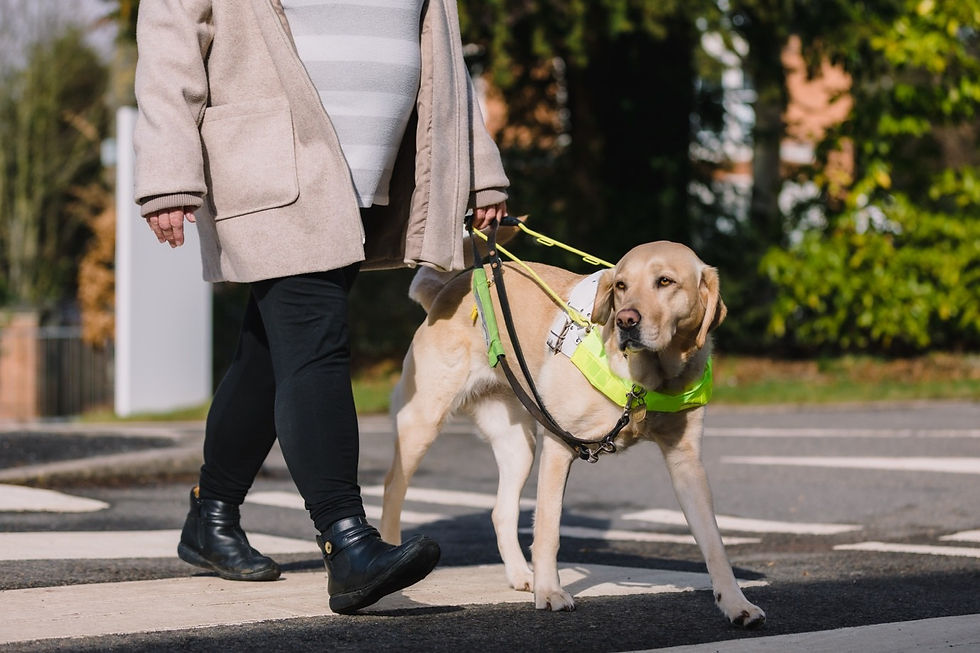
The experiments carried out in PAMELA were numerous, and one of the notable ones was our work with Transport for London, Guide Dogs for the Blind and the Royal Borough of Kensington and Chelsea. In this project, we tested a large variety of different tactile surfaces to try and find one that could be used to indicate to people with sight loss where they might have to encounter traffic in an otherwise open flat terrain. This enabled the Borough to create shared spaces on Exhibition Road. This was a project that focused on tactile paving with visually impaired people and wheelchair users at the fore of our minds. Our work with London Underground also included designing optimal train carriages, looking at different seating arrangements near to train doors, and at gaps between the platform that caters to all, especially people with accessibility challenges, and also makes boarding and alighting easier for everyone.
Another work of note was with Moorfield’s Eye Hospital, where we provided controlled experimental environments for the testing of a gene replacement therapy in patients with a genetic condition that means that they have almost total sight loss when young. The therapy, which replaced the RPE65 gene was implemented to cater to people who suffered with macular degeneration. We tested how well the therapy worked by comparing their performance in walking along a streetscape constructed in PAMELA before, six months after and over a longer period.
The transition from PAMELA to PEARL was steeped in evolution, and there has been a lot of exciting experiments carried out at PEARL since we opened our doors to accommodate the world, but this is just the beginning of a voyage of discovery, one we are keen to bring you along.


Comments